What do you do when the external environment shifts, and the next phase of growth demands more deliberate choices about where to focus, how to prioritise, and how to sustain impact over the long term?
Cambridge Global Health Partnerships knew this question well. With two decades of building reciprocal partnerships between NHS healthcare workers and partners across the Global South, CGHP brought a clear mission, deep expertise, and a strong track record of locally led impact to their strategy refresh.
But the global health landscape was changing in ways that made sharper choices necessary. In a more constrained environment, the questions of which opportunities to pursue, which partnerships to deepen, and how to grow sustainably were becoming increasingly pressing. As CGHP looked to shape its future direction, they invited the team from Alignment Cubed in conjunction with Paula Rogers-Brown from PRB Consulting to support and challenge their ongoing strategic thinking.
What followed gave them a shared language for the difficult prioritisation decisions ahead, and greater clarity about the kind of organisation they were deliberately choosing to become.
The Challenge: Growing Deliberately in a Changing Landscape
CGHP’s challenge was not one of lost direction. Their mission was clear, as were their values: reciprocal partnerships, mutual learning, locally-led transformation, and sustainable change. So was their commitment to all of them.
The challenge was one of focus and deliberate choice. As the funding landscape tightened and new opportunities continued to emerge, the question became: how do you decide between multiple valuable pathways when resources are finite? How do you ensure that growth means going deeper in the areas where you have the greatest expertise and the clearest distinctive impact, rather than doing more of everything?
A strategy refresh was underway to address exactly these questions. What CGHP wanted from the collaboration with Alignment Cubed was a framework to sharpen their thinking and practical language they could use internally when weighing competing priorities.
How Alignment Cubed Helped
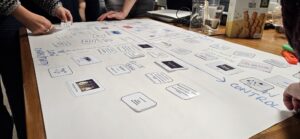
Alignment Cubed introduced CGHP to the Strategic Execution Alignment Model (SEAM), a framework that describes four distinct ways organisations create value, ranging from standardised delivery at scale, through to expert-led bespoke service, comprehensive multi-service approaches, and platform-enabled network models.
The value of working through this framework was not primarily in the taxonomy itself. It was in the quality of the conversations it enabled: structured dialogue about how CGHP currently operates, how it aspires to operate, and what the gap between those two things means for everyday strategic decisions.
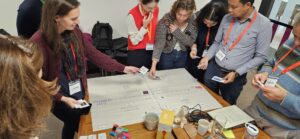
Through facilitated discussions, CGHP identified clearly that their aspiration was to create value in the way SEAM describes as a Visionary Ecosystem: through network effects, distributed ownership, and partners connecting and learning independently rather than through CGHP as a central hub. In practice, much of the team’s current work reflected an Elite Team model, with deep expertise and intensive relationships concentrated in a small, highly capable group.
Naming that gap was useful not as a judgment on how CGHP had been operating, but as a way of making their chosen direction explicit. And the framework made the transition clear: from the people doing the work, to the system doing the work.
That insight gave the leadership team a shared reference point for future decisions.
“Alignment Cubed introduced new thinking and language that was tremendously valuable input into our ongoing strategy refresh. They facilitated discussions that helped us see how we could deliver the value we offer through a new lens. In a changing funding landscape, that strategic clarity is what we needed to help to focus and prioritise to chart our path forward sustainably.”
Fiona Smith-Laittan, Chair, CGHP
What the Discussions Clarified
Several things became substantially clearer through the facilitated dialogue:
Core Expertise
The discussions helped CGHP articulate what they are genuinely best at: cultivating deep, reciprocal partnerships where mutual learning and locally-led innovation can take root. Not delivering programmes in the traditional sense but enabling equitable partnerships that generate sustainable impact through relationship depth and network connection.
A Path to Sustainable Growth
Focusing on fewer, deeper flagship partnerships, and shifting over time from CGHP-delivered work toward partner-delivered initiatives that CGHP supports, offers a route to greater long-term impact without requiring proportional increases in delivery workload. Growth through depth and network effects, rather than through scaling activity volume.
Language for Prioritisation
Perhaps most practically, the work gave the leadership team shared language for internal conversations. When evaluating opportunities, they can now ask whether a given activity reflects the kind of organisation they are building toward, or whether it pulls them in a different direction. That shared vocabulary makes prioritisation clearer, and gives strategic grounding to the harder choices, including which activities to stop.
Decision Filters, Not Just Principles
The strategic anchors that started to emerge (Listen First, Grow Together, Build What Lasts) are designed to function as practical filters rather than aspirational statements. Each one can be applied to a specific opportunity: does this start with deep understanding of local context and partner priorities? Does it ensure mutual benefit and reciprocal learning? Does it prioritise sustainable, locally-owned change over short-term project deliverables?
From Strategy to Practice
The facilitated discussions fed directly into CGHP’s strategic planning process. They developed three strategic pillars to guide their direction:
- Health Partnerships: Building long-term partnerships that deliver sustainable health systems strengthening.
- Catalyst Programmes: Enabling health workers to turn commitment into action through individual fellowships, grants and future leader programmes.
- Learning and Leading: Building understanding, capability and leadership to advocate alongside partners for global healthcare improvement.
These pillars viewed through a visionary ecosystem lens, together with the strategic anchors, provide CGHP a coherent basis for deciding what to pursue, what to decline, and where to invest limited resources. Strategic choices become easier to test: does this align with the direction we have chosen?
The Road Ahead
CGHP now has greater clarity about the kind of organisation they are building. The work ahead involves making that direction real: shifting toward a model where the partnerships themselves carry more of the work, and where CGHP’s primary role is to cultivate, connect, and enable.
That means building platforms and infrastructure for partner-to-partner learning, concentrating on flagship partnerships rather than a broad portfolio, creating systems and protocols so institutional knowledge is shared rather than held only by individuals, and developing metrics that measure network vitality and sustainable impact rather than activity volume.
It also means, as the leadership team knows well, recognising the moments when the pull of familiar patterns reasserts itself, and having the language and frameworks to ask: is this the direction we have chosen?
What This Means for Your Organisation
CGHP’s experience reveals a pattern that plays out in strategic organisations everywhere. The challenge isn’t lack of direction or commitment – it’s alignment around an identity that was never deliberately chosen.
You know what you value. You know what you aspire to be. But there’s often a gap between aspiration and operational reality. You’re creating value one way while aspiring to create it another. And until that gap is made visible and named, strategic choices remain contested.
The question most organisations face isn’t “what should we do?” It’s “what kind of organisation are we choosing to be? and do the opportunities before us align with that choice?”
Our work with organisations helps make these question answerable. Then, instead of debating individual decisions, you can ask: which identity have we deliberately chosen, and does this pull us toward it or away from it?
Identity changes everything. Disagreements become diagnosable. Trade-offs become clearer. Strategic choices gain a coherent frame.
“Alignment Cubed helped us to be really clear on what we do best and gave us the language for the prioritisation decisions and choices that we face constantly. The SEAM framework helped us name some of the tensions that are inherent in our model (small team, big ambitions, ecosystem-level impact) and that is making it much easier to have conversations about growth, efficiency, and what to stop doing. It’s been a valuable contribution at a pivotal moment for CGHP, helping to shape and strengthen our strategic thinking as we refresh our strategy and position the organisation for its next chapter and ahead of our twentieth anniversary in 2027.”
Evelyn Brealey, CGHP Director
This case study was developed in partnership with Cambridge Global Health Partnerships to share insights from an ongoing strategic journey. We thank their leadership for their thoughtful engagement and commitment to the work.
Our work starts by helping you see the implicit identity emerging in your organisation and the implications on strategic execution. You can reveal the identity emerging in your organisation by requesting access to our free Strategic Identity Assessment.
Back